Bangkok
Thailand Asks International Schools to Help Close Its Learning Gap
Senior ministry officials want international schools to pair with public counterparts in sister-school schemes. The British Chamber of Commerce has already been drawn into the talks.

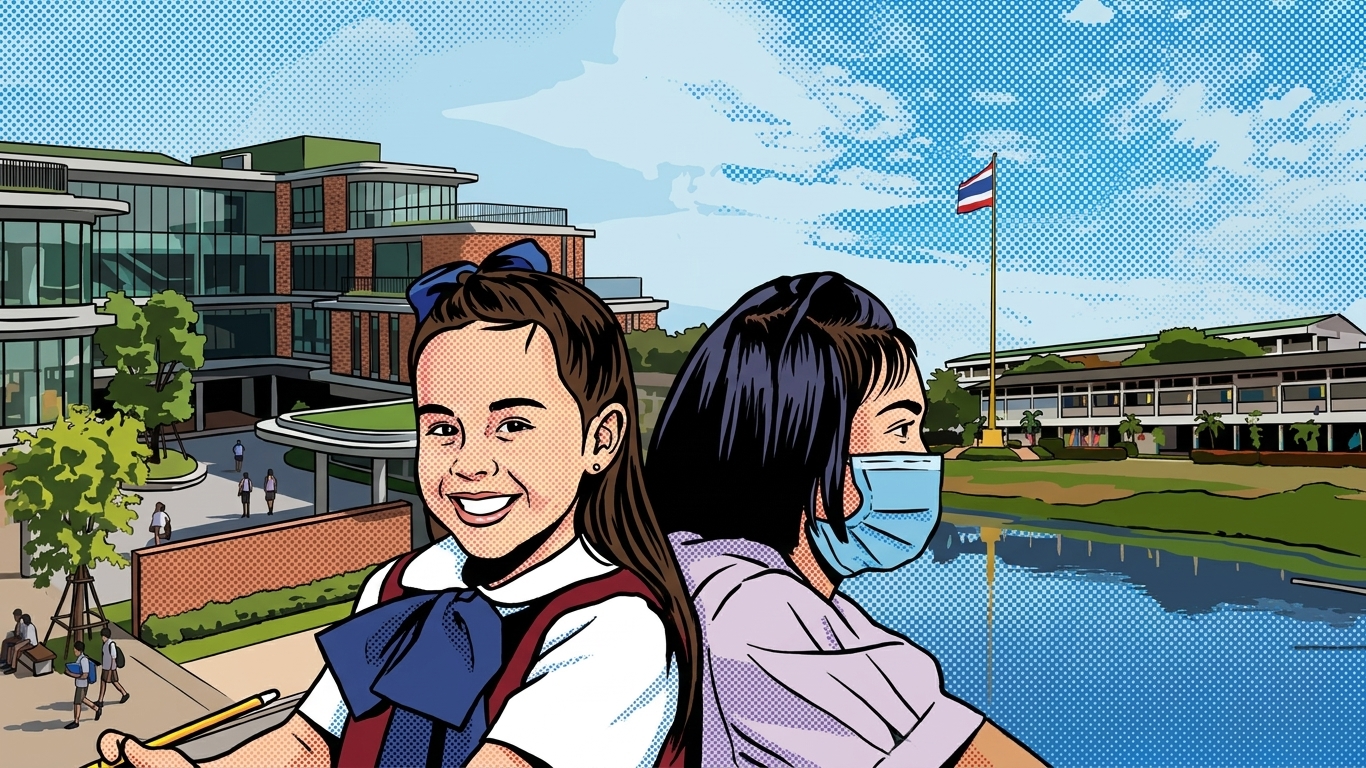
Thailand's Ministry of Education is pushing for a formal partnership model between international schools and the state sector, signalling a notable shift in how Bangkok views its growing premium private school market. The overture came into focus this month at a high-level roundtable, where officials acknowledged that the rapid expansion of international schools reflected, at least in part, a loss of confidence in public education and that the ministry wanted to channel that energy differently.
Dr Jomhadhyasnidh Bhongsatiern, head of the National Education Policy and Planning Division at the Office of the Education Council, told attendees that the ministry already viewed international schools as a valuable partner, according to The Nation Thailand. She noted that the Office of the Education Council had recently discussed education cooperation directly with the British Chamber of Commerce and representatives of international schools, marking an unusually direct signal to the British school community operating in Thailand.
Sister schools and shared labs
The proposed model centres on pairing international schools with nearby public schools so that state institutions can benchmark teaching practices and gain access to specialist facilities. Officials highlighted a proposal under which international schools could open science and IT laboratories to public school students, reducing the resource gap that has long disadvantaged pupils in provincial areas. The Ministry of Education, the Equitable Education Fund and a number of international schools are already working on early versions of these sister-school arrangements.
The backdrop is sobering. Thailand's PISA scores have declined sharply over the past decade, and inequality between urban and rural schools remains a structural problem that successive governments have struggled to address. Roundtable speakers argued that the country's roughly 66,700 international school students and their well-resourced institutions should not sit apart from that challenge but be positioned as part of the solution.
What it means for British schools
For British schools opening or expanding in Thailand in 2026, including Dulwich College Bangkok, Highgate International School Thailand, Wycombe Abbey and Glenalmond Phuket, the government's tone carries practical weight. Operators seeking licences and land-use approvals may find that demonstrating community engagement, including formal links with local state schools, smooths regulatory relationships in a market where several foreign-run schools have already faced scrutiny over licensing compliance.
Whether the ministry's ambition translates into binding obligations remains to be seen. The current framework is voluntary, and international school operators have historically been cautious about commitments that dilute their brand positioning. But the conversation has shifted. Officials are no longer simply tolerating a parallel premium sector; they are asking it to earn its place in the national education story.