Hanoi · History
BIS Hanoi began as a bilingual school in Long Bien and went fully international a year later
Opened in August 2012 as the British Vietnamese International School Hanoi, the Long Bien school handed its bilingual programme to a new site in 2013 and now enrols around 1,100 students under Nord Anglia.

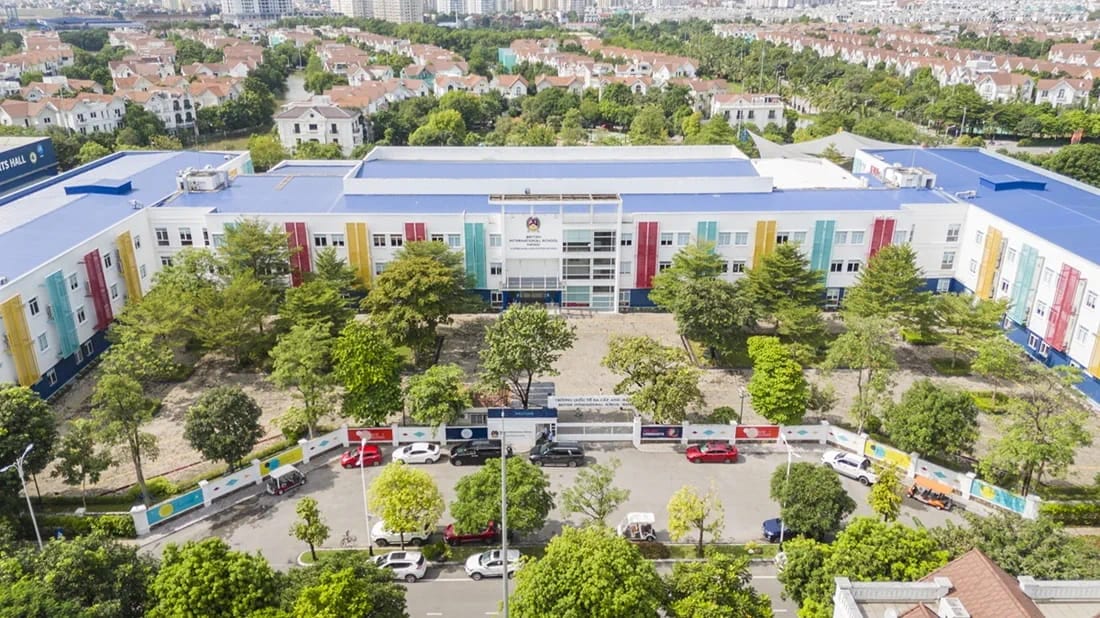
BIS Hanoi did not open as BIS Hanoi. In August 2012 it was the British Vietnamese International School Hanoi, a dual-language school inside the Vinhomes Riverside development in Long Bien District. Within a year the bilingual school had moved across the city, and the Long Bien site had become a fully international British school. Its roots lie 1,750 kilometres south in Ho Chi Minh City, where, according to the school's own history page, the first British international school in Vietnam opened in 1997.
Origins
In August 2011 the founders established the British Vietnamese International School in Ho Chi Minh City, a dual-language institution aimed at Vietnamese families seeking an international education. The Hanoi school followed twelve months later, with Anthony Rowlands as founding Principal, on the Long Bien site it still occupies today.
Rowlands arrived in Hanoi in April 2012, having spent thirteen years in UK education before moving to South-East Asia. He led the school through its formative period and left in August 2017 to become principal of BIS Ho Chi Minh City.
The pivot to a full international programme
The dual-language model was short-lived in Long Bien. In 2013 the British Vietnamese International School relocated to the Royal City Complex in Thanh Xuan District, serving Vietnamese families who wanted the bilingual offer in a central location. That move cleared the way for the Long Bien campus to convert entirely to a full international programme, and the school was renamed the British International School Hanoi.
Nord Anglia Education formally brought the school into its global network in 2015. Membership gave BIS Hanoi access to the group's partnerships, its teacher training and its Global Campus learning platform, which now connects students across more than eighty schools worldwide.
Curriculum and accreditation
The curriculum runs from the Early Years Foundation Stage for children aged two to five, through the English National Curriculum and International Primary Curriculum in primary, to Cambridge IGCSEs in Years 10 and 11. In 2016 the International Baccalaureate Organization authorised BIS Hanoi to deliver the IB Diploma Programme, making it one of a small number of Hanoi schools to offer that post-16 route.
Formal accreditation followed in quick succession. The Council of International Schools awarded full accreditation in June 2017, and the Western Association of Schools and Colleges did the same that August. The school is also a registered Cambridge Assessment International Education centre and has been a member of the Federation of British International Schools in Asia since 2015.
Results
In the 2024 IGCSE session, 45 percent of grades were awarded at A* or A, and 86 percent reached A* to C. The 2024 IB Diploma cohort achieved an average of 34.7 points against a global average of 30.3, with a 98 percent pass rate. The school reports that IGCSE and IB Diploma students have scored above the global average in each of the past four years, with graduates earning places at universities including UCLA, King's College London, the University of Toronto, and Yonsei.
Campus and present day
The campus sits in the Vinhomes Riverside neighbourhood, described locally as Little Venice, roughly twenty minutes from Hanoi's city centre. Facilities include a 25-metre indoor swimming pool, a full-sized outdoor Astroturf pitch, a 200-seat theatre with music and drama suites, and a STEAM Maker Space with 3D printers, laser cutters and robotics equipment. A separate Early Years Centre has its own splash pool, sand pit and indoor soft-play areas.
The school's Nord Anglia partnerships shape much of the programme. A collaboration with The Juilliard School underpins performing arts, and a joint STEAM initiative with MIT frames problem-solving across the curriculum. A third partnership, with UNICEF, connects students to the UN Sustainable Development Goals through debate and project work; a selected group attends the UN High Level Political Forum in New York each year. There are more than ninety clubs and activities.
BIS Hanoi enrols around 1,100 students from more than thirty nationalities, and its principal is Rebecca Carroll. It is one of several schools Nord Anglia runs in Vietnam, alongside BIS campuses in Ho Chi Minh City and the British Vietnamese International School, the bilingual school that moved out of Long Bien in 2013 and still teaches across the city.