Shanghai · History
Wellington College Shanghai opened in 2014 as the first major project in Pudong's empty Qiantan district
The school started with 300 pupils beside the Huangpu River. A decade later it had more than 1,600, the district had filled in around it, and it ranked first in Shanghai in the Hurun list.

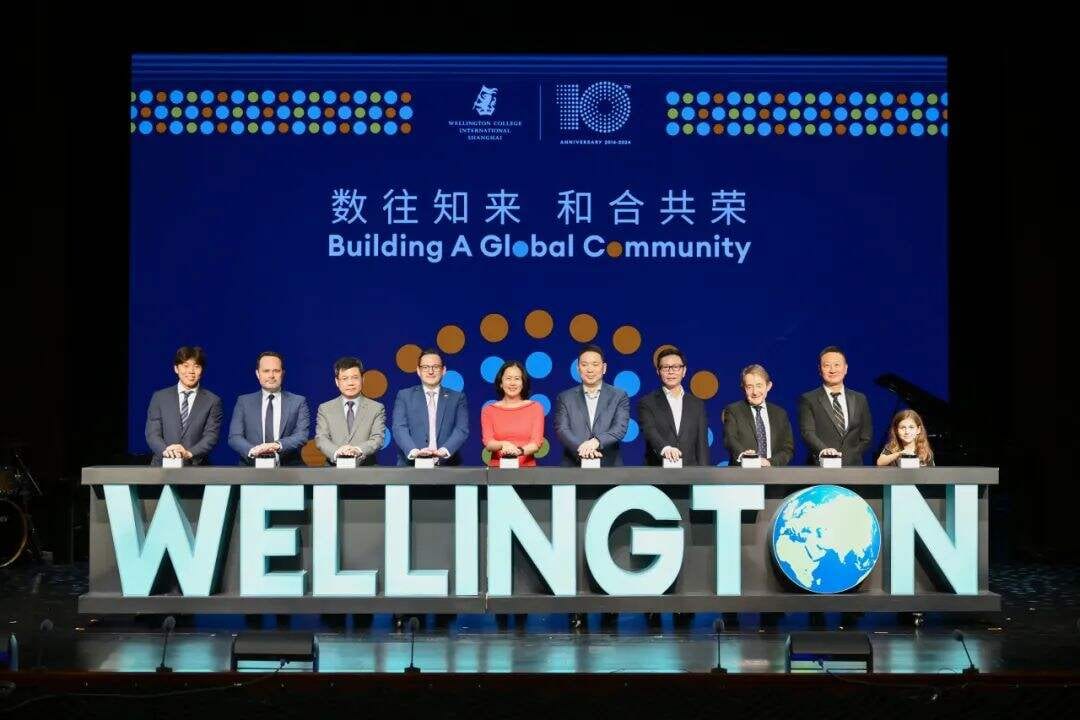
Wellington College International Shanghai opened in August 2014 in the Qiantan district of Pudong, on the Huangpu River. The neighbourhood at the time, as Master Brendon Fulton recalled a decade later, amounted to little more than "a patchwork of empty lots" around the Oriental Sports Center metro stop. The school was the first major construction project in what Lujiazui Group was positioning as Shanghai's second financial district.
Origins
The parent institution, Wellington College in Crowthorne, Berkshire, was founded by Queen Victoria in 1859 as a national monument to the Duke of Wellington. More than 150 years later, the Wellington College Education (China) group, operating in close partnership with the Berkshire college, brought the brand to China. Its first campus, Wellington College International Tianjin, opened in August 2011.
Lujiazui Group, a state-linked developer founded in 1990 that had already co-built the Tianjin school, invited Wellington College Education (China) to anchor its new Qiantan precinct. The campus was designed to echo the red-brick English classical style of the original Berkshire college. Wellington College Education (China) is structured as a not-for-profit organisation; all revenues in excess of costs stay with the schools.
The school took pupils from nursery through Year 9 in its first year, with 300 pupils taught by 65 teachers. Enrolment is restricted to children of foreign passport holders, in line with Shanghai Municipal Education Commission policy.
Growth
By the school's tenth anniversary in the 2024-25 academic year, it had grown to more than 1,600 pupils and nearly 400 staff. Qiantan grew with it: the empty lots gave way to office towers, hotels, shopping malls and housing, and the school now markets its campus as the only international school site directly on the Huangpu River, within reach of families in both Puxi and Pudong.
In 2018 the group added a bilingual sister school, Hiba Academy Shanghai, on the same Qiantan site. By 2026 the group comprised three Wellington international schools, in Tianjin, Shanghai and Hangzhou, and four Hiba Academy bilingual schools, in Shanghai, Hangzhou, Nantong and, from autumn 2026, the San Francisco Bay Area.
Brendon Fulton, who came to Wellington from the Dubai British School group where he had been Executive Headteacher, leads the Shanghai school as Master. Julian Jeffrey, who built Wellington College International Tianjin's reputation as head of school from 2017, oversees the group as Chief Executive Master of Wellington College Education (China).
Curriculum and Accreditation
Pupils follow the Early Years Foundation Stage and then the English National Curriculum to Year 9. Years 10 and 11 sit the IGCSE, and the sixth form offers only the International Baccalaureate Diploma Programme. A separate Early Years Centre on Tongwan Road takes children aged two to five.
The campus has a 500-seat theatre, a black box theatre, two swimming pools, a sports hall, football pitches and a running track. The school says it offers more than 150 co-curricular activities.
The Council of International Schools accredited the school in January 2019 and re-accredited it in February 2025. It is also accredited by the International Baccalaureate Organization and belongs to COBIS, ACAMIS and FOBISIA.
Present Day
The school now enrols 1,660 pupils aged two to 18 from more than 40 nationalities. Its 2025 IB cohort averaged 37.4 points out of 45, against a global average of 30.6, and two students scored a perfect 45. The school says its average IB score consistently places it among the top three international schools in China. More than 80 percent of graduates go on to universities in the United States and United Kingdom.
In the 2023 Hurun Education rankings of international schools in China, compiled through peer review by 353 international education experts, the school ranked first in Shanghai and fourth nationally. Pupils have won offers from twelve of the US News and World Report top 20 universities, as well as from Oxford and Cambridge.
Read the full Wellington College International Shanghai profile →